
When paid media performance disappoints, the first instinct is usually to adjust the targeting, swap the creative, or increase the budget. These are reasonable levers and sometimes the right ones. But in B2B, particularly when deals take three to six months to close, poor conversion rates often have nothing to do with what happens before the click. They reflect what happens after it.
The leads are being generated. Someone is clicking the ads, filling out forms, downloading content. The problem is that those contacts enter a sales process that was not designed to receive them, a CRM that cannot track them across a long cycle, and a feedback system that does not exist. Marketing optimizes for what it can measure within a campaign window. Sales judges quality based on outcomes that appear months later. Because neither team has a shared definition of a good lead, the same contact can be treated as a priority by one person and ignored entirely by the other.
Why B2B Paid Media Performance Looks Different When the Sales Cycle is Three Months or Longer
Most paid media platforms are built around attribution windows of seven to thirty days. That is appropriate for consumer decisions but largely irrelevant for B2B enterprise or mid-market deals, where Forrester's research places the median enterprise buying cycle at 11.3 months and Gartner finds that the average buying group for a complex B2B solution includes six to ten decision-makers. If your decision-making cycle takes three to six months, you’re not alone. The challenge is understanding what happens between that initial click and the eventual business outcome.
What this means in practice is that the metrics reported inside a paid media platform reflect activity, not outcomes. A cost-per-lead of $120 could look reasonable until you discover that none of those leads progressed past an initial discovery call. Because you rarely know which paid-generated leads eventually closed (unless your CRM is configured to capture that), you cannot tell which targeting parameters, channels or offer types actually correlate with revenue. You are optimizing within a closed loop that does not contain the information you need.
Where the Handoff Breaks Down Between Paid Media and Sales
The most common failure is not poor targeting. It is that a lead arrives in sales without a shared understanding of what it represents, what should happen next, or who is responsible for following up.
There are three places where this breaks down consistently:
-
The first is the absence of an agreed qualification definition. Marketing generates leads based on one set of criteria (job title, company size, form completion, content download) while sales qualifies them on entirely different grounds (buying intent, budget authority, active project). Without a shared definition documented and applied consistently, each team judges quality against its own private standard, and neither can explain the discrepancy to leadership.
-
The second is CRM configuration. Most CRM setups are built to capture top-of-funnel activity rather than track a lead across a twelve-month journey. Lifecycle stages are inconsistently defined, lead source attribution stops at the first touchpoint, and there is no mechanism to associate multiple contacts from the same company to a single deal.
-
The third is the feedback loop, or rather its absence. Sales rarely communicates back to marketing what happened to the leads after handoff. The consequence is that every campaign optimization decision is made without the most important data point: whether the people who clicked, converted and were handed to sales ever became customers.
How to Define Lead Qualification Before you Optimize Targeting
Before adjusting a single targeting parameter, agree on what a qualified lead looks like. This requires both marketing and sales at the table and should produce a written definition both teams apply consistently.
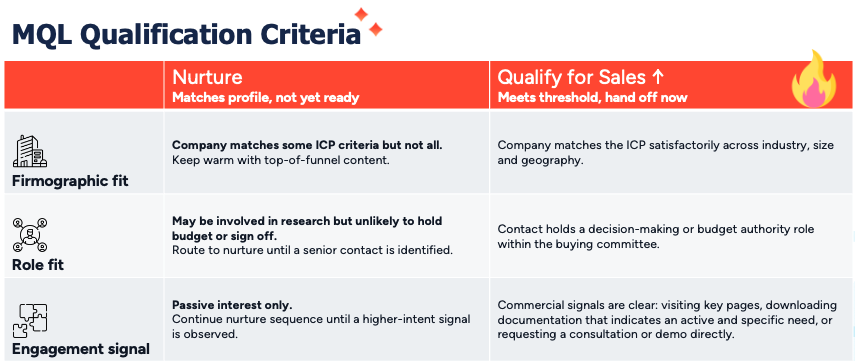
A workable MQL definition for a long-cycle B2B business combines three elements: Firmographic Fit (the company matches your ICP by industry, size and geography), Role Fit (the contact holds a relevant title or seniority level), and Engagement Signal (the contact has taken an action indicating genuine research intent, such as requesting a demo, downloading a technical document, or visiting a pricing page).
The engagement threshold is where most definitions fall apart. A whitepaper download is not the same signal as a demo request. Define the minimum engagement that justifies a sales follow-up, and route contacts who meet Firmographic and Role criteria but have not yet reached that threshold into a nurture sequence rather than a sales queue.
Building a CRM Tracking Framework that Works Across a Long Buying Cycle
The practical objective here is to configure your CRM so that a paid media lead can be tracked from first click to closed revenue, even when twelve months separate those two events.
In HubSpot, this involves several specific decisions:
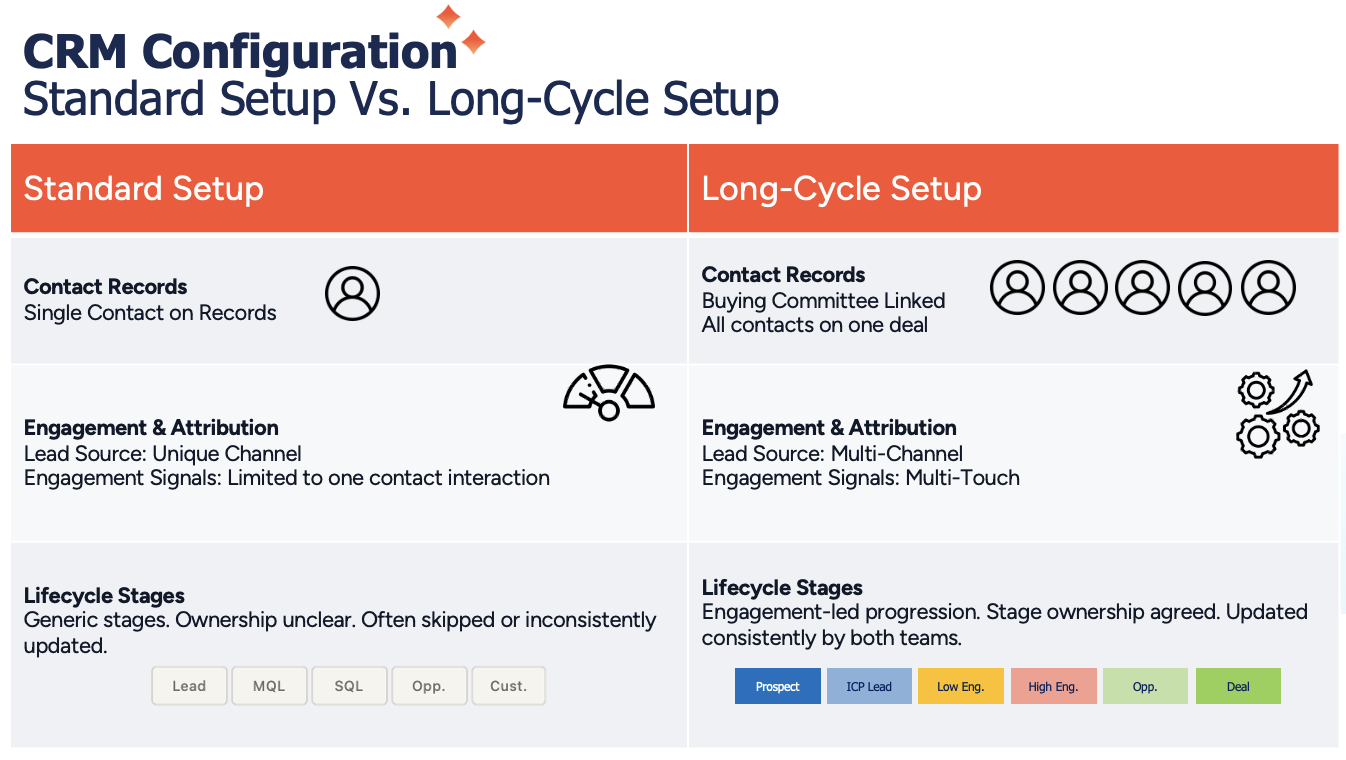
1. Set original lead source as a contact property that is populated at creation and never overwritten. This preserves attribution even when a contact interacts with multiple channels over the course of the buying journey.
2. Define lifecycle stages to reflect the actual commercial process and ensure that both marketing and sales understand what each stage means and who is responsible for moving a contact forward.
3. Associate all contacts from the same buying committee to a single deal record. When six people from the same company are engaged at different stages of a cycle, they should all appear on one deal, not as six unrelated contacts with no visible connection to each other.
If this does not describe your current setup, start with an audit of three things: whether lifecycle stages are being updated consistently, whether original lead source is preserved across the full contact journey rather than overwritten by subsequent touchpoints, and whether deals are associated with all relevant contacts rather than only the primary point of contact.
How to Create a Sales Feedback Loop that Improves Paid Media Over Time
A sales feedback loop is a structured, recurring review of what happened to leads after they were handed to sales. Without it, marketing is optimizing against incomplete information indefinitely.
The minimum viable version is a monthly review covering three questions: which paid channels produced leads that converted to sales-qualified opportunities, which channels produced volume but low conversion, and what qualitative feedback does the sales team have about lead quality this month? The output should directly inform the next month's targeting decisions. If leads from LinkedIn campaigns targeting director-level contacts converted at twice the rate of leads from broad search, that is a targeting instruction. If sales consistently reports that contacts from a particular content offer are too early to engage, that is both a qualification threshold problem and a creative brief.
A monthly thirty-minute review and a simple HubSpot report showing MQL-to-SQL conversion rate by original lead source will generate the information you need. The discipline is the review, not the complexity of the tool.
What Good Looks Like: Connecting Paid Media to Pipeline and Revenue
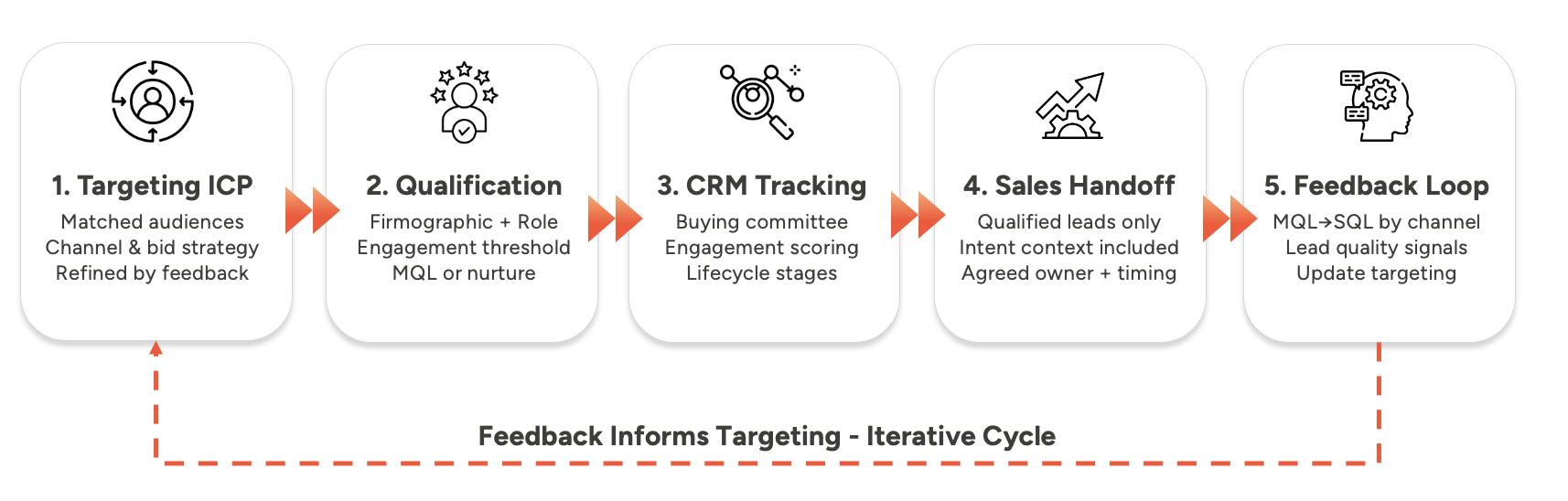
When these five components are working together, marketing can see which campaigns generate leads that actually progress through the pipeline, attribution extends beyond first touch to capture a journey spanning most of a calendar year, and budget decisions are made on pipeline contribution rather than cost-per-lead.
The more immediate benefit is internal credibility. When you can show leadership that a paid media programme generated twelve sales-qualified opportunities now active in the pipeline, the conversation about budget is very different from one where you are presenting form fills and click-through rates. Most businesses can get a workable version of qualification definition, CRM configuration and feedback loop in place within six to eight weeks.
The Strategic Takeaway
Increasing paid media budget before this system is in place will produce more of the same result: volume without pipeline, activity without attribution, and a marketing function that cannot make a credible case for its spend. The components in this guide are not a transformation programme. They are the foundation that makes paid media accountable.
If you would like to assess where the handoff is breaking down in your business, Fileroom works with B2B businesses to connect their marketing, sales and CRM systems so that growth activity produces measurable commercial outcomes. Get in touch to start the conversation.
Frequently Asked Questions
Why do my B2B paid ads generate leads but not revenue?
The most common cause is a disconnected handoff between marketing and sales rather than a problem with the ads. When there is no shared definition of a qualified lead, no CRM configured to track contacts across a long buying cycle, and no feedback loop telling marketing which leads progressed, the spend produces activity without a clear line to pipeline. Audit your qualification criteria, CRM configuration and sales process before adjusting targeting or creative.
How long should my attribution window be for B2B paid media?
For enterprise or mid-market sales cycles, ninety to one hundred and eighty days is a minimum starting point, and even that will miss a portion of deals. Forrester places the median enterprise buying cycle at 11.3 months. Your CRM, not your ad platform, should be the primary source of paid media attribution across a full buying cycle.
What is a sales feedback loop and how do I build one?
A sales feedback loop is a recurring review in which sales communicates back to marketing what happened to the leads it received: which converted, which did not, and why. In practice, a monthly review of MQL-to-SQL conversion rates by lead source, combined with qualitative input from sales, gives marketing the signal it needs to improve targeting and qualification over time.
How do I get sales to follow up on paid media leads consistently?
Agree on qualification criteria together before generating leads. When sales has been involved in defining what a qualified lead looks like, the threshold for follow-up is understood and accepted. Pair this with a CRM workflow that routes qualified leads to the right person with relevant context and a clear expectation for first contact timing.
What CRM fields should I track for B2B paid media campaigns?
At a minimum: original lead source (set at creation, never overwritten), lifecycle stage (updated consistently), associated deal (linking the contact to an active opportunity), and days in stage (identifying where contacts are stalling). In HubSpot these fields exist natively but require governance to remain accurate across a long buying cycle.




.png)




-1.png?width=19&height=19&name=Vector%20(3)-1.png)

.png?width=19&height=16&name=Vector%20(4).png)

.png?width=18&height=24&name=Vector%20(5).png)